

You already know a container can solve storage and project needs. What you need now is a plan that makes delivery to a rural property smooth, safe, and cost‑smart. I focus on clear steps that prevent surprises on delivery day. The guidance below is based on what works on ranch roads, gravel drives, and tight homesteads across Montana, and on the capabilities of local providers like MoCan Containers, who serve Billings, Bozeman, and the surrounding regions with sales, rentals, delivery, and modifications.
You will learn how to prepare a site, size the approach, choose between 20‑foot and 40‑foot units, decide on rental vs buying, plan for weather, and work with a local team that understands Montana terrain. Follow this playbook and you set up secure storage that pays off for years.
Start With the Delivery Path
Before you compare models or prices, confirm your access. Most delays happen before the truck reaches the pad.
- Measure straight‑line space for placement. Plan at least 70 feet for a 20‑foot container and 100 feet for a 40‑foot container.
- Walk the approach route. Look for tight turns, soft shoulders, culverts, low branches, overhead wires, narrow gates, and steep grades.
- Mark the route with flags at pinch points. Trim branches and widen soft edges as needed.
- Confirm turn‑around space near the pad. If a turn‑around is not possible, plan a pull‑through route.
If the route is on pasture or field, schedule delivery during dry ground or after a hard freeze. A tilt‑bed trailer needs traction to load and unload.
Prepare a Simple, Solid Pad
A level, well‑drained base protects the floor and doors and shortens the driver’s time on site.
- Excavate organic topsoil and create a firm subgrade.
- Add a compacted gravel pad or set the container on solid concrete pads or railroad ties at the corners.
- Pitch surface grade to shed water away from the doors.
- Orient doors to face high ground or a plowed path for winter access.
For clay sites, a thicker gravel layer resists rutting during spring thaw. If you plan forklift use, increase base thickness and density.
Pick the Right Size and Condition
Match the unit to your site, use, and placement limits.
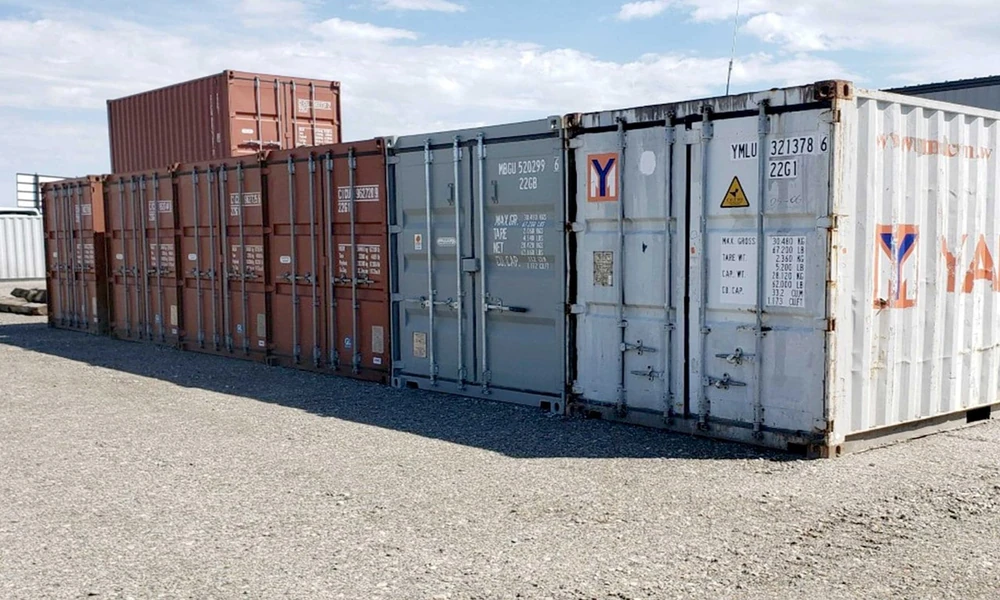
- 20‑foot shipping containers
- Interior: 19 ft 4 in L x 7 ft 10 in H x 7 ft 8 in W
- Easier placement on short drives and tighter sites
- Strong fit for residential container storage, small construction site storage containers, farm storage containers, and container storage for moving
- 40‑foot shipping containers
- Interior: 39 ft 5 in L x 8 ft 10 in H x 7 ft 8 in W
- Best for large projects, ranch storage solutions, business inventory storage, and long‑term storage solutions
- New, one‑trip shipping containers
- Clean paint, tight seals, minimal wear
- Good pick for secure storage containers in harsh weather
- Used shipping containers
- Lower cost with cosmetic wear
- Still wind and watertight when sourced from a trusted yard
For shipping containers Montana buyers, local selection in Billings MT and Bozeman MT cuts transport time and makes in‑person inspection easy.
Rental vs Buying in Montana
Set your plan by project length and mobility needs.
- Choose shipping container rentals Montana if you need short‑term or seasonal storage containers for remodels, harvest, or inventory peaks. Rentals also help during a move or while a shop is under construction.
- Choose shipping containers for sale Montana if you want fixed, long‑term storage or plan custom work. Ownership pays off for permanent ranch storage solutions, construction staging, or workshop conversions.
Shipping container prices Montana vary by size, condition, and fuel costs. With MoCan Containers, rental rates start at $150 per month for 20‑foot units and $190 per month for 40‑foot units, with purchase pricing based on current inventory and condition. That range helps you compare container rental vs buying with clear numbers in mind.
Weather and Timing Tactics
Montana weather shapes delivery success. Plan with the season in mind.
- Winter: Plow and sand the approach. Flag icy grades. Keep door area clear for safe access.
- Spring: Avoid soft fields. Use a geotextile layer under fresh gravel on wet sites.
- Summer: Control dust for visibility. Watch fire risk near dry grass.
- Fall: Place units before freeze to settle the pad and align doors.
Book a morning slot if your road softens by afternoon heat. If the site is on a north slope, add extra gravel for permafrost heave zones.
Modifications That Matter on Rural Sites
Custom shipping container modifications can improve access, comfort, and security.
- Roll‑up or personnel doors for shop traffic
- Vents for air flow to reduce moisture
- Shelving and partition walls for tool zones and feed storage
- Insulation and power for office, workshop, or cold‑sensitive goods
- Security lock box and lighting for remote yards
Plan modifications before delivery if the final weight or door layout affects placement.
How Delivery Day Should Run
Make the on‑site process clear and quick.
1. Park extra vehicles away from the route and pad.
2. Meet the driver at the road entrance. Confirm the route and final door swing.
3. Walk the last 100 yards together. Point out soft areas and buried lines.
4. Place the unit, then fine‑tune the level at the corners. Check door swing and latch.
5. Add blocks or shims at corners to keep doors square.
6. Photograph placement from each side for your records.
Keep a rake, shovel, blocks, and a level on hand. Small adjustments save time.
Common Mistakes That Slow Delivery
Avoid these simple errors.
- Underestimating the length needed for safe offload
- Skipping tree trimming over the last turn
- Placing the pad on low ground near a gate
- Forgetting snow drift patterns across the door side
- Waiting to plan power or lighting until after placement
Why I Point Montana Buyers to MoCan Containers
You want a local partner with stock, service, and delivery skill. MoCan Containers checks those boxes across Billings, Bozeman, Yellowstone County, Gallatin Valley, Paradise Valley, and much of central and eastern Montana.
They maintain one of the largest inventories in the region, with new and used 20‑foot and 40‑foot units. You can inspect and select the exact container. Their units are waterproof, leakproof, wind and watertight, and lockable, which fits Montana wind and freeze cycles. Their drivers use tilt‑bed trailers and place units with care in tight or rough areas. They also support custom builds if you plan a workshop, office, or retail box.
If you value predictable service, local stock, and clear delivery guidance, they are a strong option.
Quick Buying Guide for Rural Properties
Use this list to lock in a smart choice.
- Confirm size and condition by seeing the unit in person
- Verify interior dimensions against your largest items
- Choose rental for short jobs, buy for long‑term storage
- Book delivery with space for 70 feet or 100 feet as needed
- Build a compacted, drained pad before the truck arrives
- Plan door orientation for winter and for daily workflow
- Add modifications that support how you will use the space
Final Thought
A shipping container can serve as secure storage, a mobile shop, or a project hub. With the right prep, the right size, and an experienced Montana provider, delivery to a rural property is straightforward. Measure the route, build the pad, and set a placement plan. Then your container works on day one and keeps working through every season.