


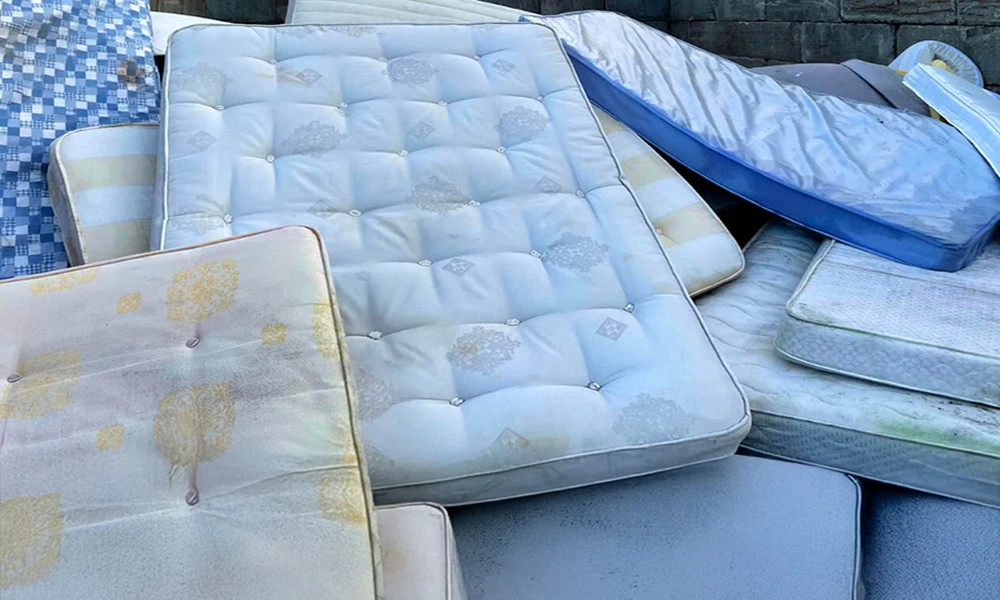
Dragging a sagging mattress out to the curb feels like a relief, until you realize it could linger in a landfill for decades, quietly leaching chemicals into the earth and clogging up precious space. Every year, millions of mattresses are tossed away in North America, and most people have no idea there is a smarter, cheaper way to handle their old bedding.
The Problem with Traditional Mattress Disposal
Why Mattresses Are Hard to Dispose Of
A mattress might look simple, but it’s a recycling nightmare. Fabric, foam, wood, steel springs, these materials are fused together in a way that makes them difficult to break apart. Most municipal waste systems are not equipped to handle mattresses, so these bulky items usually wind up in landfills or, worse, on the side of the road.
Environmental Impact of Landfilling Mattresses
A typical mattress can take up to 80-100 years to fully break down, slowly releasing chemical flame retardants and volatile organic compounds as it decomposes. Now multiply that by the millions dumped each year, and you get an environmental headache. In addition, mattresses trap air and do not compact easily, which means even modern landfills struggle to manage them efficiently.
The Hidden Costs of Throwing Mattresses Away
Getting rid of a mattress isn’t just bad for the planet; it’s tough on your wallet too. Disposal fees can range from $20 to $50 in many cities. Sometimes, you may be fined for illegal dumping if you try to skirt the rules. In most cases, the “out of sight, out of mind” approach just shifts the cost elsewhere, higher taxes, more landfill management, and a heavier burden on local governments.
Early Attempts at Mattress Recycling
Initial Efforts and Challenges
Mattress recycling is not a new concept. Early efforts were often small-scale and hampered by the sheer difficulty of dismantling a modern mattress. Many programs relied on manual labor and lacked the equipment to efficiently separate the materials.
Limited Recycling Programs and Their Impact
A handful of cities piloted mattress recycling, but without investment or strong regulation, these programs struggled. The impact was minimal; the vast majority of mattresses kept ending up in landfills. At the time, most people were unaware that mattress recycling even existed.
Public Awareness and Participation Issues
Even when recycling was available, a lack of public education meant participation rates stayed low. Many simply assumed recycling a mattress was too much of a hassle, or too expensive.
How Mattress Recycling Has Evolved Over Time
Innovations in Mattress Dismantling and Material Recovery
Modern recycling centers have turned mattress dismantling into a science. Specialized machines now strip away fabric, foam, and springs, allowing for efficient recovery of materials. Steel is melted down, wood is chipped for mulch or biofuel, and foam can become carpet padding.
The Rise of Dedicated Recycling Programs
Cities and provinces, especially in Canada, began to see the economic and ecological benefits of organized mattress recycling. Partnerships between governments and private recyclers have streamlined collection, processing, and awareness campaigns.
Case Study: Recyc-Matelas and Its Role in Canada
In Quebec and Ontario, Recyc-Matelas has emerged as a leader. With over 4 million mattresses recycled so far, their innovative approach diverts massive amounts of waste from landfills each year. They offer a sustainable, environmentally friendly solution, and make recycling accessible for residents in major cities like Montreal and Toronto.
The Current State of Mattress Recycling
How Mattress Recycling Works Today
Today, many regions offer curbside pickup or drop-off services for old mattresses. From there, mattresses are transported to specialized facilities where the materials are sorted, cleaned, and sent off for reuse or recycling. This process not only keeps bulky waste out of landfills but creates jobs and new products.
Key Players and Regional Differences
Availability varies by region. In Quebec and Ontario, programs are robust thanks to initiatives like Recyc-Matelas. Toronto and Montreal each have their own systems, often partnering with dedicated recyclers. In other areas, access may be limited to private companies or select municipal programs.
Benefits Beyond the Environment: Saving Money and Resources
Recycling a mattress can actually save you money, especially if your city subsidizes the process or waives landfill fees for recyclables. You also avoid potential fines for improper disposal. Plus, choosing recycling supports local green jobs and reduces the demand for raw materials.
Practical Steps for Beginners to Recycle Mattresses
How to Find Local Mattress Recycling Services
Start with your city’s waste management site to check if drop-off or curbside pickup is offered. If not, search for private companies or nonprofits specializing in mattress recycling, many list their service areas and pricing online.
What to Expect from the Recycling Process
Most programs require you to remove bedding and ensure the mattress is dry and free of bedbugs. Some recyclers may charge a small fee, but it’s often less than landfill disposal. Once collected, your mattress is processed and its components repurposed.
Tips for Maximizing Savings through Recycling
– Compare local options: Prices and policies vary by city.
– Take advantage of municipal collection days when fees may be reduced or waived.
– Consider recycling multiple items together to lower per-piece costs.
The Future of Mattress Recycling
Emerging Technologies and Sustainable Materials
New mattress designs are focusing on ease of disassembly and recyclability. Some manufacturers now use single-material components that simplify future recycling and reduce toxic additives.
Potential Policy Changes and Industry Trends
Expect more cities and provinces to adopt mandatory recycling laws or extended producer responsibility (EPR) systems. These policies shift costs away from the consumer and encourage manufacturers to design with recycling in mind.
How Consumers Can Influence the Market
Demand better take-back options when you buy a new mattress. Ask retailers about recycling when you make a purchase. Your voice, and your choices, push the market toward more sustainable solutions.
Conclusion: Turning Old Mattresses Into New Opportunities
Recycling your old mattress is more than an environmental gesture; it can help you avoid extra costs and even support local economies. As awareness grows and recycling programs like Recyc-Matelas expand, it’s easier than ever to make a responsible, cost-effective choice. By choosing to recycle, you’re not just clearing out your bedroom, you’re helping to create a cleaner, more sustainable future for everyone.